
Buy With Knowledge. Buy With Confidence.
Everything You Need to Know About Diamonds and Fine Jewelry.
We believe an informed customer is a happy customer. Whether you're buying your first diamond or your tenth, our education hub has clear, honest guidance to help you make the right choice.
Understanding the 4Cs of Diamonds
The 4Cs are the universal standard for evaluating diamond quality. Here's what each one means, and why it matters when you're shopping.
-
1.Cut
Cut refers to how well a diamond has been shaped and faceted, its proportions, symmetry, and polish. This is the most important of the 4Cs because it directly determines how brilliantly a diamond sparkles. An ideal cut diamond reflects light from facet to facet, creating that signature prism effect. A poorly cut diamond will look dull, no matter how large or clear it is.
-
2.Clarity
Clarity measures how free a diamond is from internal flaws (called inclusions) and surface blemishes. Diamonds are graded on a scale from Flawless to Included. Most inclusions are invisible to the naked eye, so it's worth understanding which clarity grades still look perfect in real life, and where you can save budget without compromising appearance.
-
3.Colour
Colour in diamonds refers to the presence or absence of body colour. The GIA scale runs from D (colourless) to Z (light yellow or brown). The closer to colourless, the rarer and more valuable the stone. For most engagement rings, a grade between D and J will appear colourless to the naked eye; the difference between grades at this level is most visible to trained professionals under magnification.
-
4.Carat
Carat is the weight of the diamond, not its size, though the two are related. Two diamonds of the same carat weight can look very different in size depending on their cut and shape. It's worth considering carat weight in relation to cut and shape before making a decision based on carat alone.
Choosing Your Diamond Shape
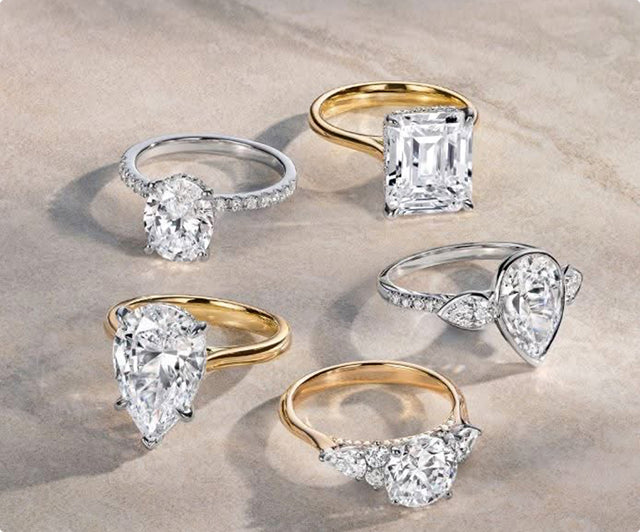
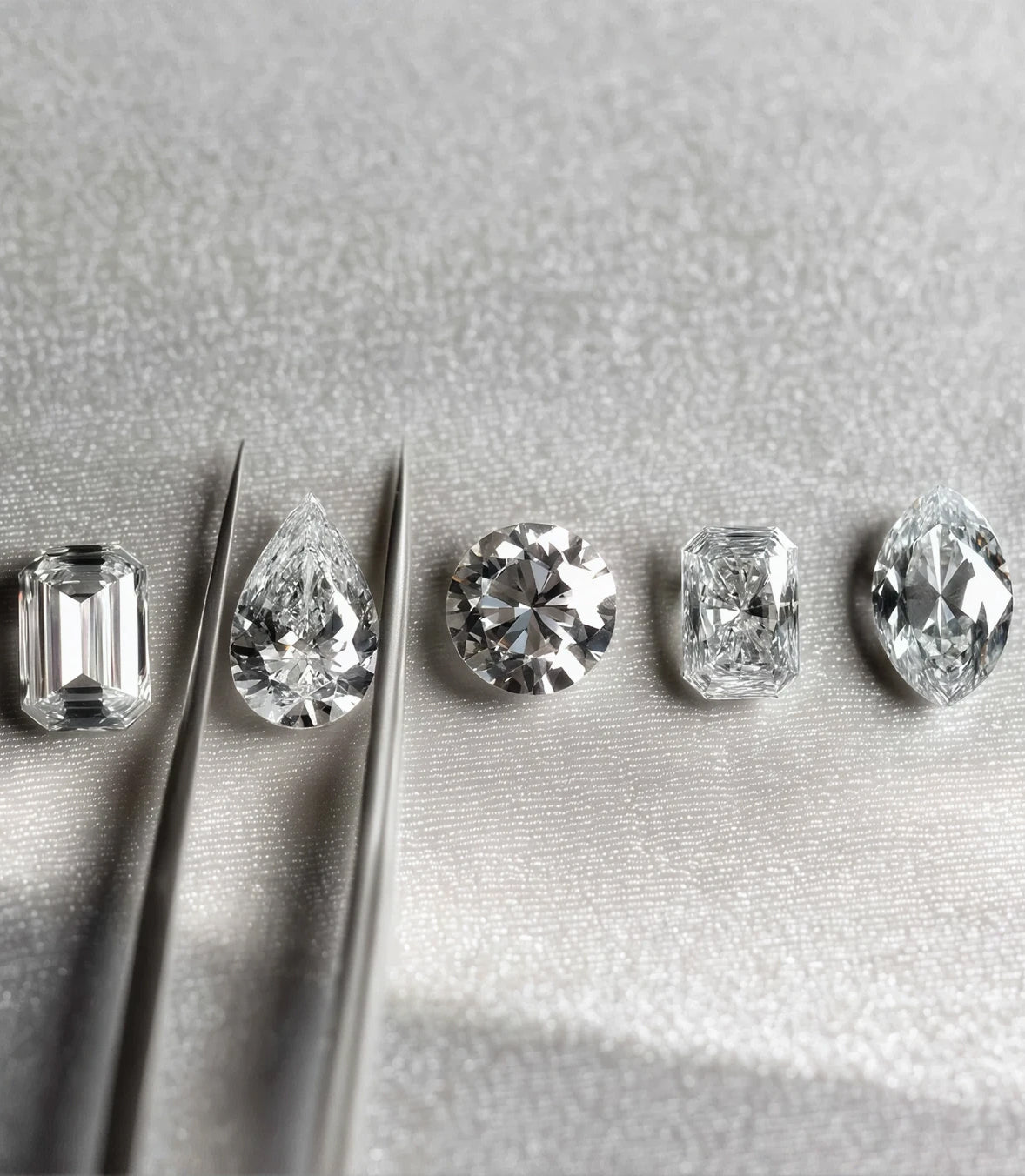
Shape is one of the first and most personal decisions in choosing a diamond. It defines the look and feel of the entire ring. Here's a quick guide to the most popular shapes:
Round Brilliant
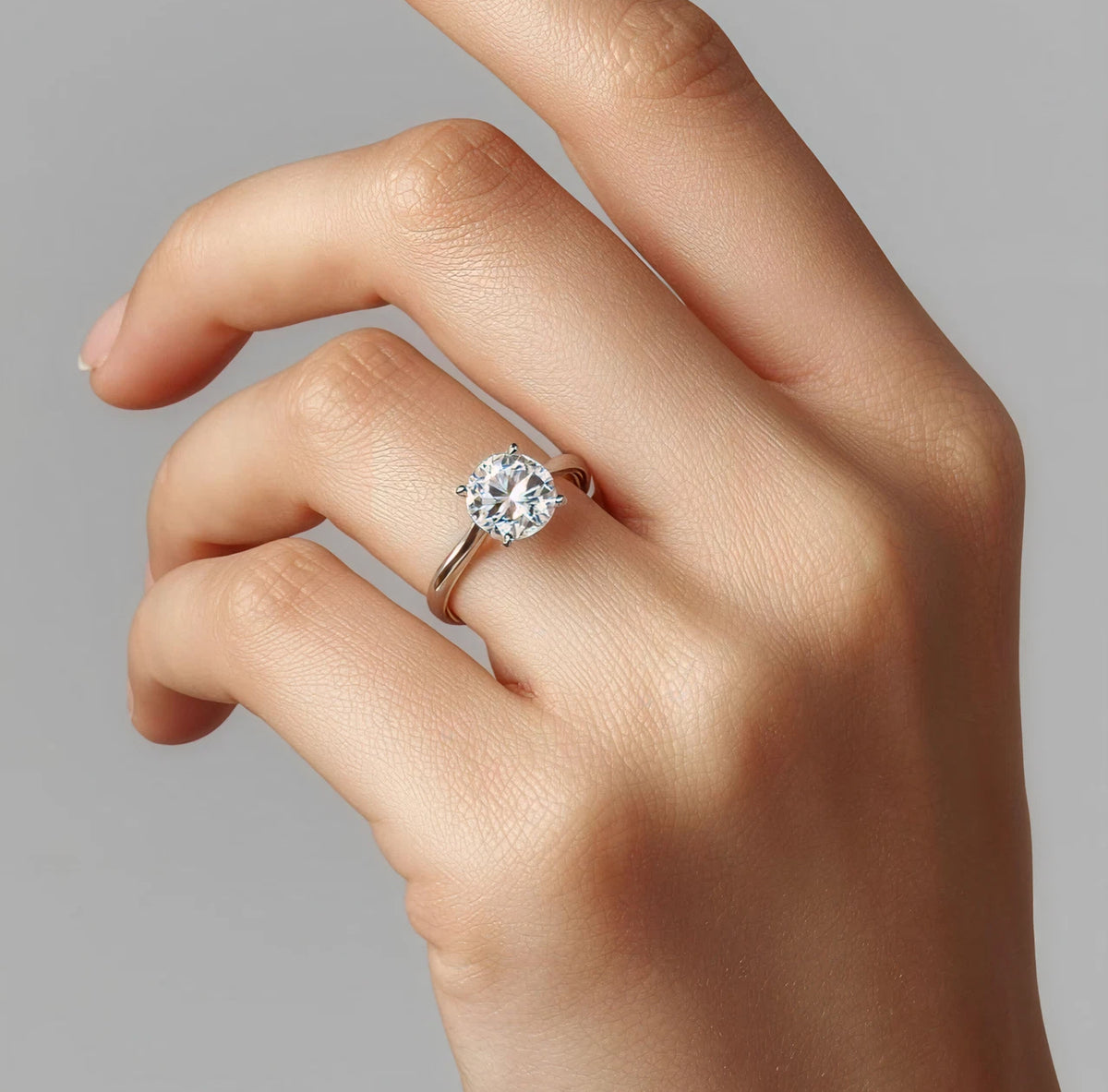
The most popular shape. Maximum sparkle, timeless appeal, suits every hand.
Princess
Square cut with brilliant faceting. Modern and bold, great for those who want something a little different.
Oval
Elongated shape that creates the illusion of a longer, slimmer finger. Romantic and distinctive.
Cushion
Soft, rounded corners with a vintage feel. Romantic and increasingly popular.
Emerald
Rectangular with step-cut facets. Sophisticated, minimalist, and elegant.
Pear
Teardrop shape. Unique and eye-catching, flattering on most hand shapes.
Marquise
Elongated with pointed ends. Maximises carat weight and creates a dramatic, regal look.
Asscher
Square step-cut with deep facets. Vintage-inspired and art deco in feel.
Radiant
Rectangular or square with brilliant-cut facets. Combines the elegance of the emerald cut with the sparkle of a round.
Lab Grown Diamonds: The Facts
Lab-grown diamonds are real diamonds, not simulants like cubic zirconia or moissanite. They are created in a controlled laboratory environment that replicates the natural conditions under which diamonds form deep in the earth. The result is a stone that is chemically, physically, and optically identical to a mined diamond.

Why Consider Lab-Grown?
- Same brilliance and hardness as a mined diamond
- Certified by GIA and other leading gemological laboratories
- Significantly lower price, often 50 -70% less than comparable mined diamonds
- Ethically sourced, no mining required
Common Question
Q: Can you tell the difference between a lab-grown and a mined diamond?
A: Not with the naked eye, and not even with most standard jewellery tools. The only way to distinguish them is with specialist equipment. To a trained gemologist and to anyone looking at your ring, a lab-grown diamond looks identical to a mined stone.
How to Choose an Engagement Ring: A Practical Guide
Choosing an engagement ring can feel overwhelming, especially when you're doing it as a surprise. Here's a simple framework to help you navigate the process with confidence.
-
1.Know her style
Is she classic and timeless, modern and minimal, or bold and unique? Look at the jewelry she wears day to day for clues.
-
2.Set a realistic budget.
There are beautiful rings at every price point. Be honest about what you're comfortable spending and let our team show you what's possible within that range. You may be surprised.
-
3.Understand the 4Cs.
You don't need to become an expert, but knowing the basics will help you make trade-offs that get you the best stone for your budget.
-
4.Think about her lifestyle
An active person may prefer a lower, more secure setting. Someone with an office job might love a high, dramatic setting. The right ring fits her life, not just her finger.
-
5.Come talk to us
Seriously. Our team has helped thousands of couples find the right ring. A conversation costs nothing and will save you hours of second-guessing.
How to Get the Most From Your Ring Budget
You don't need to spend a fortune to buy a beautiful diamond. Here are
some practical tips for maximising your budget:
1. Prioritise cut above all else - A well-cut diamond of modest size will outsparkle a larger, poorly cut stone every time.
2. Consider near-colourless grades - Diamonds graded G, H, or I appear colourless to the naked eye and cost significantly less than D, E, or F.
3. Go one step below eye-clean clarity - SI1 or SI2 diamonds often look identical to higher clarity grades in person, at a fraction of the price.
4. Look at lab-grown diamonds - You can get a significantly larger, higher-quality stone for the same budget as a mined diamond.
5. Choose a shape strategically - Round brilliants command a premium. Oval, cushion, and pear-shaped diamonds of the same carat weight often cost 20-40% less.
Frequently Asked Questions
Do I need an appointment to visit Lustig Jewelers?
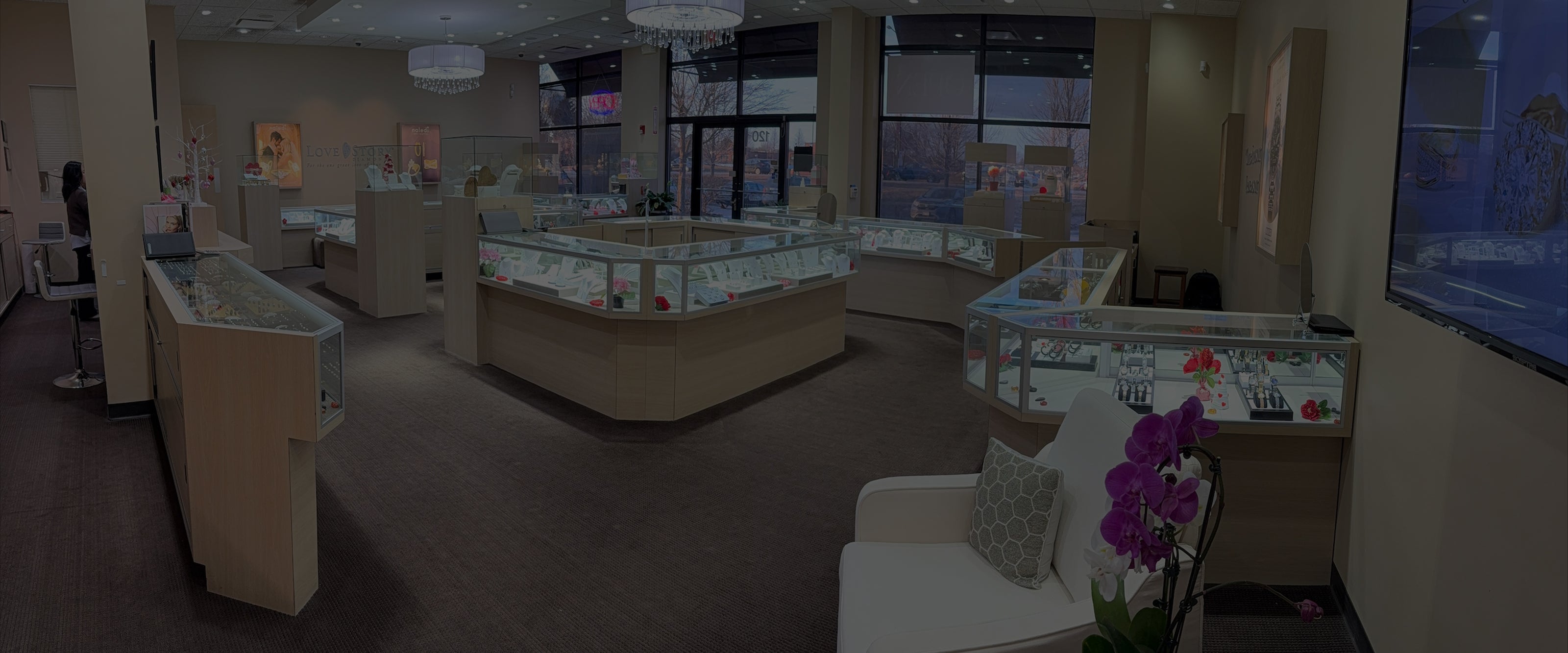
No appointment is needed to browse our showroom; you're welcome to walk in any time during our opening hours. However, if you'd like dedicated one-on-one time with our team for a custom design consultation or engagement ring guidance, booking ahead ensures we can give you our full attention.
How long does a custom jewelry piece take?
Timelines vary depending on the complexity of the design. A consultation with Roman is the best way to get an accurate timeline for your specific piece. We'll always be honest about what's realistic and work with your schedule where we can.
Do you work with customers' own stones or existing jewelry?
Absolutely. We love giving new life to heirloom pieces and family gemstones. Bring in what you have, and we'll discuss the possibilities.
What is the difference between a lab-grown and a natural diamond?
Lab-grown diamonds are chemically and physically identical to mined diamonds; the only difference is how they were formed. Lab-grown diamonds are created in a controlled laboratory environment rather than extracted from the earth. They are real diamonds, certified by the same gemological laboratories.
Do you offer financing?
Yes. We offer flexible financing options ranging from 6 to 18 months. Please visit our Financing page or speak to our team in-store for details.
Do you offer jewelry cleaning and maintenance?
Yes, please enquire in store. We're happy to advise on the best way to care for your specific pieces.

WE GOT YOU COVERED
Not Sure Where to Start?
Start With a Conversation.
Our consultations are free, relaxed, and completely no-pressure. Come in and tell us what's on your mind, and we'll take it from there.